/Garage/NTAPHSE
| NTAPHSE | ||
|
|
Phoenix, AZ, USA Joined: 02/13/2008 |
|
Builder, Custom Rodder, Build-It, Drive-It, H.A.M.B., Off-Road
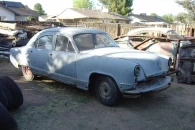
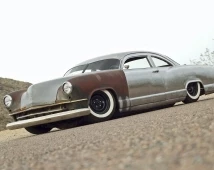
Kaiser Manhattan "Kustom"
- Sheetmetal shears
- Right angle die grinder with 1 1/2" drum sander
- Small flathead screwdriver
- Q Tips
- Acetone
- White grease
- Plastic polishing compound
- Buffing wheel
- Superglue
Disassemble gauge cluster
After removing the gauge cluster from the dash, carefully pry back the tabs using a small flathead screwdriver to open the case.
The gauges are just mounted with flathead screws, pull those out.
Disassembled parts
Mark gauge location
This step took some figuring to get the gauge to line up in the window. I cut a little bit at a time on the first one until I had the right location.
Cut gauge holes
I used right and left hand sheetmetal shears to make my cuts, then used a right angle grinder with a 1 1/2" sanding drum to smooth the sheetmetal and fine tune the fit.
Here you can see the windows that need to align with the gauges.
Remove speedometer lettering
Shannon at Redline Gaugeworks helped me with a couple of ideas and I decided the best option was to remove the lettering on the speedo and keep the stock Kaiser numbers.
I used acetone on a Q-tip to carefully remove the numbers but keep the hash marks since they line up perfectly with the stock Kaiser numbers.
First I ground a curve into a small flathead screwdriver and pried the bezel off the gauge.

Then I VERY carefully wiped away the numbers with Q-tips dipped in acetone.

I also polished up the lens. It's amazing how 50 years of dirt can actually protect a part. This thing looks brand new with a little polishing.
Drill hole for odometer button
Drill a hole for the odometer button. This button is also used to program the speedometer. I used the old white grease trick to transfer the location of the button onto the lens. Make sure you use a dull drill bit when drilling plastic. A sharp one will catch the plastic and crack it every time. They make special plastic bits but I have always had good luck with a dull bit. If the bit is too sharp you can sand it down a little too.

Modify gauge faces
After a lot of thought I decided to use the stock gauge faces over the Autometer gauges. Autometer does not suggest doing this because they spend a lot of time making their gauges extremely accurate and I just threw all that out the window by doing this. However, this is a show car and the accuracy will be good enough.
I removed the stock gauge faces and cut them down, then cut the plastic gauge cups until the faces fit.

I also made some reference marks on the gauge housing in case I ever really need to know what the gauge is reading.

Next I glued the stock face to the Autometer gauge. No turning back now!

Modify mounting cups
AutoMeter uses excellent mounting cups to secure their gauges. They are quick and easy to install and adjust. I cut 1/2" off the front of the mounting cups and used PVC pipe spacers to shim the gauge forward in the pod. This put the gauge face right up against the lens. I used my bandsaw for this but you could use any cutting tool.

Here you can see how the PVC spacers fit. I had to trim and sand them to get everything positioned properly.
Reassemble
I put everything back together and here is the final result. I think it looks pretty stock still, and I have a lot more confidence in the modern gauges than the 58 year old ones I removed.
I'm still trying to decide if I should paint the needles black, leave a comment and let me know what you think.
Here's the gauge cluster mounted in the dash pod. I can't wait to get it all installed in the car.
Here's the back of the pod. I had to sand a little here and there, but it all fits fine.