/Garage/RoadLeveler
| RoadLeveler | ||
|
|
Mesa, AZ, USA Joined: 10/02/2007 |
|
Build-It, Drive-It, Euro, Tuner
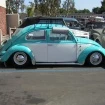
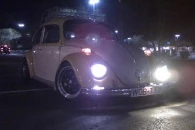
Volkswagon Beetle "Betty"
- Small flat screwdriver
- 1/4" flat screwdriver
- Precision screwdriver set
- Needle nose pliers
- Glass cleaner
- Glass cutter (optional)
- Paint (optional)
- gauge needing refurbishing link
Step One: Open the gauge

The first step to this is getting the bezels and lens off the gauge so things can be disassembled and cleaned. This is done with a small screwdriver, by pressing it between the side of the gauge and the rear lip of the bezel and gently twisting it. You may need to use a precision screwdriver to get this started as the gap can be very tight on some models. Also, some of them have plastic bodies, and can be cracked very easily so you'll want to be really careful about it.


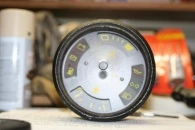
The bezels and lens typically come off all at once, but are composed of 4 layers:
The inner bezel
The lens
The seal
The outer bezel
Be careful not to tear the seal when you take it apart since i dont think you can get new ones and it keeps dust from getting inside the gauge.
Step Two: Customizing/cleaning/fixing
Now that you have the gauge apart, its time to figure out what needs to be cleaned or fixed. My gauge was already fully functioning and surprisingly clean inside. The steps taken to fully disassemble the gauge and fix functional problems are different for every model, but most are very easy to take apart and can typically only come apart in one way. Just be sure to keep track of everything ou take off and, if needed, make a diagram or labeled dixie cups to help make sure you put everything back in order.
My goal with the gauge was to clean and paint the bezels to match my car, and replace the lens.
Here, i've painted the inner bezel with a cream paint that matches the 2-tone color on my car:


Here i've used a glass cutter and needle nose pliers to trim down a glass lens from a VW speedo to replace the ugly pointy plastic one that came with the gauge.

then i used a bench grinder to fine trim the size. I dont recommend this method. Wet sandpaper, or a very fine diamond wheel on a dremel may work better.

Now I cleaned the glass with my favorite glass cleaner, and painted the outer bezel with semi-gloss black engine paint. This is great stuff for almost any use because it dries in about 15 minutes and is very durable.

Now its ready to go back together.
Step Three: Reassemble
Now its time to put the gauge back together. Stack the bezels and lens back in the order they came out, first blowing out the dust, and making sure to handle the lens only by the edges to avoid fingerprints on the inside.


Once you've got everything put back on, its time to re-pinch the lip on the back of the bezel.
The easiest way to do this is with a 1/4" flat screwdriver, pressing with the corner of the blade and rocking it slightly toward the gauge body from the edge.
Hopefully i dont need to tell you not to do it like this:

because you'll stab your hand, no matter how careful you are, and it sucks. So do it like this:

with the gauge on a paper towell or soft cloth, so as not to scratch up the fresh bezel.
When you're done it should look like this:

It should be tight, and the bezel shouldn't be able to rotate. It will be knicked up a bit, but this is the mounting surface, and wont be visible when it's installed.
Step Four: Install
Your gauge should now be ready to be wired up and installed.

I put mine in my bug, along with the matching tach and oil pressure gauge, and a VDO boost gauge which will soon be hooked up to the turbo i'm getting ready to install.

There it is! Much better than before. Thanks for reading, and I hope this was helpful!