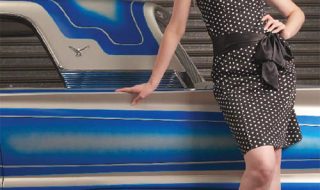
Cool Hot Rods and Customs from Australia It wasn't easy, but after 6 cell calls and struggling through the crowds at 2011 Viva Las Vegas, I finally met up with Luke Ray, the creative mind behind Fuel Magazine. Fuel Magazine's all about the hot rods, custom cars, bikes and oh yes... the girls that make Australia's scene one not to miss. Available in the traditional styled "Small book" format, it's a very high quality publication where no expense is spared on printing. The latest issue, #07 is "'The Customs Issue". Luke figured it'd be cool to do a customs biased issue, seeing as there are so many cool custom cars here in Australia. Sounds great to me... my book's in the mail. Luke also features some of the world's greatest artists. Here's a quick sample that's not so coincidentally pretty friendly on the eyes. One of these days, I'll go see first hand. Until then, preview Fuel Magazine Issue #7 here: Buy Australian Hot Rod Magazine: Fuel Have you seen Fuel before? Let us know what you...
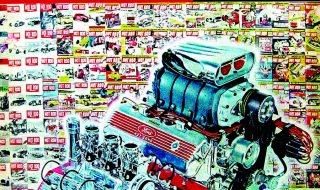
Book Review: Hot Rod Magazine – All the Covers
posted by pikesan
HOT ROD Magazine: All the Covers Ever find yourself searching through a stack of old Hot Rod magazines at a swap meet? When ever I do, I'm pretty amazed at how you're able to tell the era of the magazine simply by the cover. Usually as I flip through them I catch myself thinking "late 70's, mid 80's, ahh here's an early 60's"... all from the information presented to me on the cover. Getting your vehicle featured on the cover of Hot Rod magazine has to be the ultimate reward for a builder. It's one thing to be lucky enough to receive a feature in the most influential automotive magazine of all time, but making the cover is simply iconic as you are now locked forever into the history of hot rodding. Imagine if you could some how capture all those amazing covers in one place, all 60+ years worth? Well your lucky day is here with the newly released book: HOT ROD Magazine: All the Covers by Drew Hardin along with the editors of HOT ROD. I simply love this book and I have shared it with several...
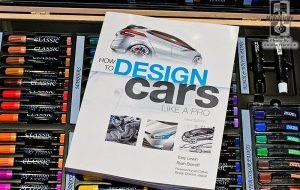
Book Review: How to Design Cars Like a Pro
posted by Bubba Harmon
Famous Car Designers Say How it's Done Have you ever attended a manufacturers’ auto show and wondered what it takes to design a modern automobile? Then, Motorbooks’ new title "How to Design Cars Like a Pro", written by Tony Lewin and Ryan Borroff, is for you. This totally revised 2010 edition of the classic first released in 2003 takes you into the world of auto design. It includes interviews with top designers and top car makes such as Marek Reichman of Aston Martin and Adrian van Hooydonk of BMW. It also includes the design inspirations of such modern vehicles like the Chevrolet Camaro and the Volkswagen Scirocco. Find out what a typical week looks like for a designer by following chief designer at Land Rover, Oliver le Grice, as he goes about his week. How to Design Cars Like a Pro tries to define what makes a good design and the steps needed to get from concept to reality. I feel the best parts of the book are the chapters on "design and great designers" and "right idea, wrong time." Those two chapters are an excellent historical accounting of...
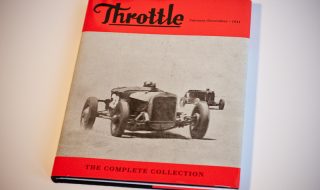
Throttle, The Original Hot Rod Magazine
posted by Hechtspeed
Throttle Magazine was the first known "hot rod" magazine, before it was even known as hot rodding. Throttle was almost 100% focused on southern California Lakes and Midget racing. It was only printed for 1 year, 1941, and included 12 issues. The bombing of Pearl Harbor turned the USA upside down and hot rodding all but dried up for 3-4 years along with the magazine. Throttle never came back after WWII ended. "Hot Rod Magazine" picked things back up in January 1948 with their first issue. Here's a quick look at Throttle through a Reprint book I purchased at The Rodders Journal website. Thom Taylor (check out Thom's website ThomTaylorDesigns.com), hot rod artist, was the person who spearheaded the effort to put together a quality reprint of all 12 issues. No small task considering relatively few copies were printed and the fact that they are almost 70 years old. That's Old School cool! Here's a glimpse from the Introduction by Thom Taylor of just what kind of effort was involved in this project: "Jack Peters, who created Throttle and was its editor and publisher, was an enigma. Finding out what happened to him was difficult but also...
Origins of Speed – a Historical Look Back
posted by Hechtspeed
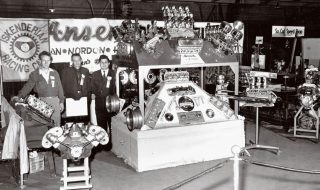
1948 Hot Rod Show display with Jack Andrews, Charlie Nordon and Ed Iskenderian...Pic Courtesy of Ed Iskenderian. Click to Enlarge. I know hot rods and customs is what brings us car guys and gals together but, its the people that make this hobby what it is. Everyone has their own story. My passion for the automobile started with my dad and uncle. They have hot rodded off and on since they were teenagers. It was their hobby, their passion. It's what kept them out of trouble when their dad passed away at the age of 15 and 12. My dad has tons of stories of his '64 Mercury Comet Cyclone on the streets of Azusa, Calif and the original Irwindale Dragstrip. My uncle has stories of tearing up GMR (Glendora Mountain Road) in his Nova and Datsun 510. Most of my close friends are there because of our common interestes in cars. My brother and I and my cousin have our own stories of cars (and motorcycles) that we have customized that we can share with our kids. It's the Hecht pasttime. Gardena Speedway, September 15, 1946 photo...
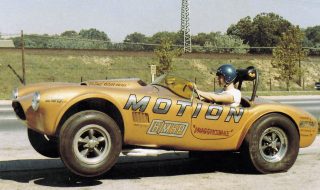
11.50 at 120mph Money-back Performance Guarantee
posted by pikesan
Who was Joel Rosen? Ever heard of Baldwin-Motion? Or maybe just, "Motion Performance"? Back in the late 50's and early 60's, a young Joel Rosen finished high school at only 17 to begin college, but then joined the Air Force to get some more hands on experience. It was at Shepards Air Force Base where Rosen fine tuned his engine tuning and mechanical skills that he later used to hot rod his first car, a 1955 Olds 88 that ended up with a 4 barrel and a McCullough supercharger. From there, Rosen bought his high school dream car, a fuelie 58 'vette, and used tune-up work and brake jobs to fund his real passion: Build Motion Performance Super Cars. This new book by Motorbooks publishing, Motion Performance: Tales of a Muscle Car Builder by Martyn L. Schorr, a man who obviously was THERE, says: Mr. Motion was responsible for building, racing and selling the most outrageous low-volume-production, high-performance, new-car-dealer-delivered Chevrolets you could buy during those freewheeling decades. Baldwin-Motion Chevys have since become highly prized mega-priced collectibles that best define the Decade of Extreme Performance. This book is recommended by...
Book Review: Top 25 Race Cars of All Time
posted by Hechtspeed
We've got another treat for you guys and gals from Motorbooks. This time, we take a look at Basem Wasef's "Legendary Race Cars". "Legendary Race Cars" is Basem's Top 25 Race Cars of all time. I dig how he's chosen cars from all corners of the globe and from all forms of racing. The book includes an off-road race truck, a WRC Rally Car, a Pikes Peak turbo monster, Le Mans cars from various decades, F1, a Nostalgia NHRA dragster and a few cars from the early 1900's. The pictures and photography are excellent. It includes shots taken by the author himself as well as old archive photography from the race car's hey-day. Here's a few examples below of Basem's quality work. You can't have a Top Race Car's list without the legendary Ford GT40 can you? Here's a Jaguar D-Type which won the 1956 24 Hours of LeMans with a 200 HP 3,442 cc Dual Overhead Cam inline 6 cylinder. The curvy lines of these 50's LeMan's cars are pure sports car perfection. Another legend, the Shelby Cobra Daytona Coupe, winner of the 1965 LeMans race. The author explains the details...
Winning: The Racing Life of Paul Newman
posted by Hechtspeed
Automotive book publisher Motorbooks recently launched a new book about Paul Newman. "Winning: The Racing Life of Paul Newan" was written by Matt Stone and Preston Lerner with a foreword by none other than Mario Andretti himself, a personal friend and driver for Paul Newman. Most people know Paul Newman for his movies. As a slick pool player in "The Hustler" and then in "The Color of Money" and he could do comedy too in "Slap Stick". These movies and a long list of others made Paul Newman a Hollywood legend! But the book, good for me, doesn't cover the movie side of Paul. "Winning" focuses on how Paul Newman got into racing, the team's he owned, the cars he modified for the street and the many race cars he drove and his impact on the people surrounding him. Paul Newman didn't start racing until he was 47 years old. Many speculate that if he had started when he was 17, (or younger like the racers growing up now behind the wheel of shifter carts) he may have been one of the greats. He wasn't fast right out of the gate, but he was...
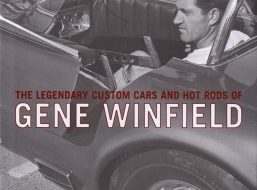
The Legendary Custom Cars and Hot Rods of Gene Winfield
posted by Hechtspeed
The Legendary Custom Cars and Hot Rods of Gene Winfield is a new offering from Motorbooks written by David Grant. The title could have had an addendum that says "A pure automotive styling genius far ahead of his time." I became a huge fan of Gene from the first time I laid eyes on his creations in the "little books" when I lived on the East coast. The book gives you a tremendous insight as to how he did what he did. This man just went out and built his dreams. If there was a part he needed and was not available, he manufactured it. Gene fabricated his own dual carb intake manifold for his '31 Model A, constructed custom headlight rings from hub caps, fingertip control steering and a camera & small television to substitute for a rear view mirror are a few of his innovations. Within the storyline of this book we are allowed into his private life by hearing stories about him from former members of the Century Toppers Car Club as well as former coworkers "Hammer Happy" and Sam Foose. The text is...
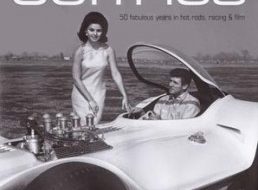
Dean Jeffries: 50 Fabulous Years in Hot Rods, Racing and Film
posted by Brian
Dean Jeffries 50 Fabulous Years in Hot Rods, Racing and Film By Tom Cotter This new book on Dean Jeffries, written by Tom Cotter (and forwarded by Bruce Meyer) is a fun look at the career of one of the most under-rated builders of all-time. As stated right from the beginning, Jeffries was never one to "toot his own horn", and this may be a large part of the reason that many folks don't know that much about this incredibly talented man. While he was one of the pioneers of the custom car movement (alongside the more "celebrity" names like Barris, Winfield, Von Dutch and Ed Roth), he's always been relegated to the footnotes, or seems to play the "behind-the-scenes" role more often than not. The humble visionary was born in Lynwood, California in 1933, the second of three children, and from an early age took an interest in cars... but preferred metal work to mechanical, as he hated to get his hands dirty. His father being a mechanic and truck driver who wrenched on race cars (midgets, namely), took young Dean to the races, further inspiring him. Jeffries...
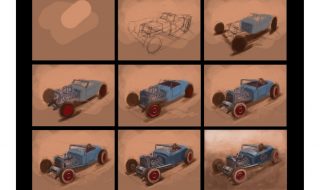
Hot Rod Art Book by Designer Dwayne Vance
posted by pikesan
The Hot Rod Art book: Masters of chicken scratch is a book of 13 highly respected and talented artists from the industry. While I am fairly new to the art and design scene in the Hot Rod world, I know many people in the industry from my years working as a designer for Hot Wheels. (Dwayne designed one of my favorite hot wheels) I now have my own design company and still do design work for Hot Wheels as well as several other companies. I design things from snowmobiles to concepts for video games. I started doing Hot Rod art about a year and a half ago and it only fueled my passion for the automobile. My fascination with cars began at a very early age. I grew up around cars and rebuilt my first muscle car at the age of 16 with my dad. I attended the Art Center College of design and received my degree in transportation design. My professional design career started with Troy Lee Designs in Corona, California, as a designer of high-end motocross protective gear. I then became a senior designer for Mattel, Hot...
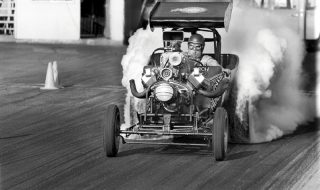
Speedseekers Photobook: Vintage Drags & More – Book Review
posted by pikesan
Speedseekers is new book by German born designer and photographer Alexandra Lier. Visiting Speedweek's salt for the first time, she was hooked. Suddenly a fascination with fast cars, hot rods and customs drove her from her design studio to garages shooting top mechanics and builders or she was off to races to get more pics of the cars she loves. That passion is captured in her first book, Speedseekers Organized into five main chapters, History, Garage, Speed, Landspeed, and Style & Sound. That first chapter about history might as well say "vintage drag racing" cause the included photos are a fantastic collection of legendary racers from Wild Willie Borsch to to Big Daddy Don Garlits to a fiery burnoutin his first rear engine dragster by the legendary "TV" Tommy Ivo. I spent over an hour studying the vintage pictures, then explained some of them to my sons: "This guy held on with only one hand!" I can't get enough of nostalgia drags and the people and cars that made it great (and still do in some cases). From there, I skimmed over the Garage chapter to check out Speed....