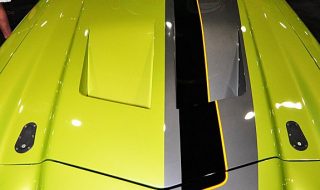
New Entries Selected from the SEMA 2013 Show Floor OPTIMA® Batteries Announces “Golden Ticket” Winners for the 2013 Ultimate Street Car Invitational Best-of-the-Best SEMA Show Vehicles Selected to Compete In Sixth Annual Invitational on November 9th November 7, 2013 (LAS VEGAS) – OPTIMA® Batteries announced the final vehicle participants for the 2013 OPTIMA Ultimate Street Car Invitational, during a press conference at the SEMA Show. These qualifiers were selected by a committee of OPTIMA and industry representatives who walked the SEMA show floor in Las Vegas to recognize the best of the best across all performance vehicle segments. The following drivers are the finalists selected, earning a spot to compete in this year’s OPTIMA Ultimate Street Car Invitational: 2010 Audi R8, William Horan 1950 Chevy Thriftmaster Truck, Jonathan Ward 1993 Mazda RX-7, Scott Sangpiel 1973 Chevy Camaro, Randy Johnson 2013 Ford Focus ST-M, Mark German 1969 Pontiac GTO, Darren Nickleson 1965 Ford Mustang, Alan Palmer 1995 Toyota Supra, Joe Delgato 1968 Chevy Camaro, Karl Dunn 1967 Ford Mustang, Ed Moss “There are so many extraordinary vehicles at SEMA and we are always impressed with the quality of unique vehicles that are at the show,”...
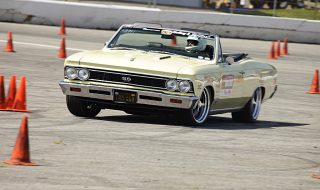
Autocrossing “Whimpy” 1966 Chevelle SS396 Convertible at OUSCI
posted by pikesan
OPTIMA Invitational Qualifier Lynda Jacobs It's been my pleasure to work with Optima for their after-SEMA race called the Optima Ultimate Street Car Invitational. What is it? Well, check this out to catch up... Basically, it's a race of the best cars from the SEMA Show floor and qualifying races all over the country. One racer happens to drive a road hugging, original appearing 1966 Chevelle SS 396 convertible and SHE is every bit the muscle car enthusiast and race car driver you'd ever imagine! Qualifying at LS Fest, she's the real deal. Meet Lynda Jacobs. Lynda kindly told us her story of racing and her first muscle car, this black-plate 1966 Chevelle. Words and Pictures from Lynda... My husband Chris and I have been married for 15 years. We both had cars and racing in our lives and that also played into our meeting as well. A mutual friend who had a body shop helped make the introduction and the rest was history. We went to Great Lakes Dragway on our second date. Chris has been into Chevelles his whole life. First car was...
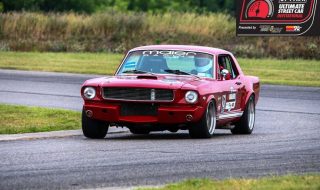
2013 Optima Ultimate Street Car Invitational – The Racers!
posted by pikesan
Who's Coming and What Radical Race Car are they bringing? 2013 OPTIMA® Ultimate Street Car Invitational: Second Group of Finalists Revealed If you can't find a car to like in this group... you don't like cars! From a BMW M3 wagon to classic Camaros and Mustangs, the OUSCI has you covered. All of these race cars will be seen at SEMA, many of them inside as part of vendor displays. Then on Friday, they'll take to the streets and make the parade lap leaving SEMA followed by a rally-style out to Pahrump, NV and the Spring Mountain Ranch race track where they'll kick things off on Saturday morning. Check out more details below. The Upcoming Sixth Annual OPTIMA® Ultimate Street Car Invitational to Showcase a Strong Mix of Imported and Domestic Vehicles OPTIMA Batteries, the global leader in high-performance automotive and marine batteries, gears up for the sixth annual OPTIMA Ultimate Street Car Invitational, presented by K&N Filters and Royal Purple, by revealing the initial list of drivers and vehicles that have been invited to compete in the event. OPTIMA Batteries has long been the battery of choice for many automotive enthusiasts looking for better...
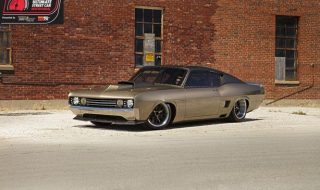
2013 Optima Search for the Ultimate Street Car TV Debut
posted by pikesan
OPTIMA Shootout Qualifiers at Road America Premiere of OPTIMA’s Search for the Ultimate Street Car: Faceoff at Road America Qualifier Event to Air on MAV TV Network OPTIMA’s Faceoff at Road America Qualifying Event Episode Premieres Thursday, October 31 with more high intensity performance vehicles and nail-biting action Oct. 17, 2012 (MILWAUKEE) – OPTIMA® Batteries, the global leader in high-performance automotive and marine AGM batteries and chargers, is proud to announce the premiere of the OPTIMA’s Search for the Ultimate Street Car series to air on Thursday, October 31 at 6 p.m. EDT and 9 p.m. EDT on MAV TV. In the premiere, viewers will get a behind-the-scenes look at the action during the OPTIMA Faceoff at Road America in Elkhart Lake, Wisconsin. This regional qualifying event introduces a diverse range of performance vehicles and the stories behind the passionate drivers as they compete on one of the most historic race tracks in America. “This episode captures the passion of the automotive community with a great cast of entertaining characters. If you’re looking for fast beautiful cars, then this is your show,” said Cam Douglass director of product development and marketing for OPTIMA Batteries....
2013 Optima Invitational – Road America Faceoff Results
posted by pikesan
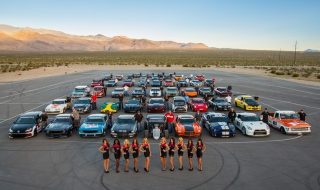
OPTIMA Faceoff at Road America Awards - A Hot Rod Wins! Optima Faceoff at Road America Awards Four OPTIMA Invitational Entries Among Largest Group of Participants in Faceoff History, 1964 Chevy Corvette, 2013 Nissan GTR, 1963 Pontiac Tempest and 1981 Pontiac Trans Am earned entries to the 2013 OPTIMA Ultimate Street Car Invitational June 25, 2013 (MILWAUKEE) – The OPTIMA® Faceoff at Road America, presented by Royal Purple and K&N Filters, returned to Elkhart Lake, Wisconsin, this past weekend with more than 70 participants. The event, which will be showcased on television later this fall, kicked-off on Friday, June 21 at Johnson Controls Headquarters with a car show and charitable OPTIMA Build-A-Bike event benefiting Milwaukee area Boys & Girls Clubs and Neighborhood House of Milwaukee. The Faceoff at Road America is a Regional Qualifier event leading up to OPTIMA’s Ultimate Street Car Invitational, to be held in Pahrump, NV, after the SEMA show in early November. The driving and fun began Saturday as all of the Faceoff participants drove more than 60 miles through Wisconsin’s scenic Kettle Moraine State Park to the Road America facility in the Detroit...
2013 Optima Invitational – Get Tickets Now
posted by pikesan
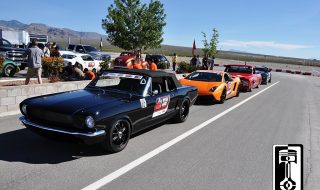
Spectator Tickets Available for: 2013 OPTIMA Ultimate Street Car Invitational Sixth Annual OPTIMA® Invitational Promises to be Another Thrilling Automotive Event More info about the rides racing at the OUSCI Today OPTIMA® Batteries released a limited number of spectator tickets for its sixth annual OPTIMA® Ultimate Street Car Invitational presented by K&N Filters and Royal Purple. Spectator tickets to the Pahrump, Nevada event, which sold out in 2012, are available for purchase online. Spectators are invited to watch the action-packed event where participants – both up-and-comers and industry favorites – from around the world compete for the OPTIMA Ultimate Street Car title. Fans are advised to act quickly because the 2012 event sold out of spectator tickets. Last year, the OPTIMA Ultimate Street Car Invitational brought in massive crowds with a sold out event, more thrilling moments and record times, ultimately crowning Mark Stielow and his custom 1967 Chevrolet Camaro as the 2012 OPTIMA Ultimate Street Car. "We’re looking forward to another exciting year of this growing event as we continue to layer on different challenges and elements for a new experience for fans and...
OPTIMA® Batteries Announces Faceoff at Road America event June 21-23
posted by JCourter
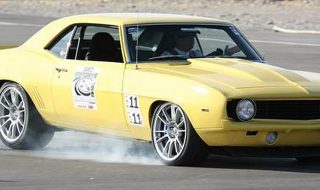
OPTIMA Ultimate Street Car Invitational Qualifier May 21, 2013, (MILWAUKEE) – Back by popular demand, OPTIMA Batteries will once again host the OPTIMA Faceoff at Road America event in Elkhart Lake, Wis., June 21-23. Presented by Royal Purple and K&N Filters, the OPTIMA Faceoff at Road America will showcase one-of-a-kind performance vehicles during an action-packed weekend of high-powered activity. The OPTIMA Faceoff at Road America brings together a wide range of the best street-legal performance vehicles including vintage, late-model, import and domestic entries of all makes, and is a regional qualifying event for the prestigious OPTIMA Ultimate Street Car Invitational occurring later in the year. The OPTIMA Faceoff at Road America event will be filmed for television as part of the expanding OPTIMA’s Search for the Ultimate Street Car series. Automotive celebrity and former WWE wrestler, Bill Goldberg, will be onsite as returning show host. Participants and spectators will also have the opportunity to interact with select cast members from the “R U Faster Than a Redneck” television show. Several of the “Redneck” drivers, including Brian Finch, and brothers Jason and Lonny Childress will be participating in the...

Optima Invitational’s Bitch’n Race Trucks
posted by pikesan
Top 25 and Can Tow the Other Cars! (Click to see any picture full size) I give you a bitch'n five-pack of race inspired (ok, they're pretty much full on race cars except for the Blazer) of 70s Chevy C10 trucks! As I said, the Optima Invitational was a diverse event, filled with the coolest and fastest cars from SEMA, and not just late model Camaros and Mustangs. I've seen some great looking C10's bagged and laying frame in Arizona, but I haven't seen any that could hold their own at the local SCCA autocross! In a social media experiment (or maybe I just don't have much info) I'll try and get the owners to fill-in the details on their trucks. I've got some Facebook or email contacts, so wish me luck! -UPDATE! Got info from Rob MacGregor and Curt Hill. Pictured up top and right here is Phil Gerber's 1970 Chevrolet C10: Phil yank'n and bank'n on the autocross Phil drove to a #12 finish and was the "Top Truck" in the competition. Congratulations on some skilled driving and a great looking truck! Next, pictured above and with his...
Budget Pro-Touring Mustang on the Track
posted by pikesan
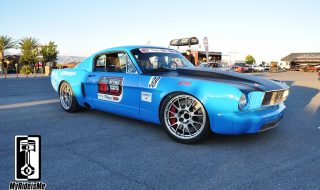
1966 Mustang Fastback - Pro-Touring on a Budget One of the hightlights of the Optima Ultimate Street Car Invitational (aka OUSCI) was meeting Ron Schwarz, the owner of this extremely well done - homebuilt - 1966 Ford Mustang fastback. Sporting all the pro-touring trim, MyRideisMe.com featured this car long ago as part of a how-to story: Build A Pro-touring Mustang for $5000 The key point was, as you can imagine, "Do it yourself". With a few stickers, new wheels and a new, budget blowing LS motor, Ron's Schwarz's Mustang now cracks the wallet closer to $15,000, but I'd guess is still many thousands on-the-cheap compared to the other competitors at the Optima Invitational. Unbelievably, Ron finished 33rd in the Design challenge. I don't know what those cats are looking for, but this was a ground up car featuring only what's needed to go fast. Other than that, Ron finished just outside the top 20 on the Hot Lap Challenge and the Speed Stop Challenge, but did bring home a top 20 in the Autocross. At least he can say he tied with the Lamborghini! ...
Optima Invitational – Hot Rod Diversity Training
posted by pikesan
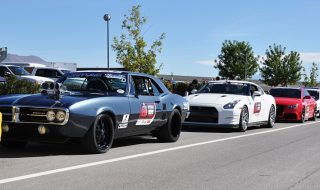
More than just Camaros and Mustangs at the OUSCI (Click to see any picture full size) If you're in the corporate world, you've heard about diversity. You've probably had some training on it so you can be more sensitive or some other nonsense like that. The way I see it, different strokes for different folks and that's never been more true than in the rides we choose. Am I right? At the Optima Ultimate Street Car Invitational (damn that's a long name!) the race car diversity was on overload! Shown above, all racing in the same event: 3rd place finishing 2003 Mitsubishi Evo (yellow one barely visible), 1967 Pontiac, 2013 GTR, , a 2012 Audi RS5, 2012 Fiat Abarth, 1986 Porsche Carrera, and some others you'll see in another photo. Right up front and a great example of diversity is the Pontiac. How often do you see this motor at an SCCA race? This blown 1967 Pontiac Firebird owned by Mike Ardito made hot laps on the track, did the autocross, the road race... and I think held it's own in the performance and design competition! Todd Faust's 1966 Mustang leads the...
Optima Invitational- The Race of SEMA Superstars
posted by pikesan
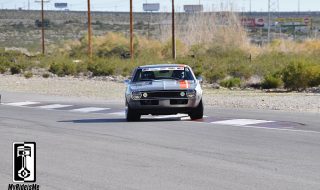
At Speed and Sideways at the OUSCI Your guide to all that was GREAT at the 2012 Optima Ultimate Street Car Invitational. (Click to see any picture full size) Well... drowning in too many pictures of great looking and performing rides, I've spent too much time trying to make a great summary of the post-SEMA Optima race aka the OUSCI. So rather than attempt to dazzle you with my witty, yet descriptive account of the race, I'll let my photos speak for me. Let me summarize: Great racing, I'll be back! I'll list all the stories about the race here as I write them, so check back and please share with other fans. Dream Ride - Optima Invitational Raced Twin Turbo Lamborghini Road Racing and Autocross Diversity Training Thanks to Optima Back and Still under budget Pro-touring 1966 Mustang Fastback Top 25 Finishing, Pro-touring Styled Chevy Trucks Drifting a 10,000 lb Freightliner For the pictures here, shown above, in his GM performance packed 1967 Camaro is event winner Mark Steilow. I'm planning a more detailed story about Mark and his ripping fast Camaro, so for now, enjoy the hard-chargin,...
Underground Twin Turbo Lamborghini Dream Ride – Just Lucky
posted by pikesan
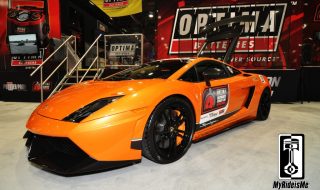
My Ride in an Lamborghini Superleggara Ever been to SEMA? Then you've dreamed. When I stumbled upon this stunning orange Lamborghini in the Optima Batteries booth, was I dreaming to ride in it? Nah, probably not. There'd be no way... how could I make that happen? It's more of a fantasy... not something that'd happen to me. Well it did! So what did I see in the booth? Allow me to elaborate: This is a 2011 Lamborghini Gallardo. To be more specific, it's the Superleggera version. Superleggera refers to the special lightweight construction thanks to carbon fiber used all over the place. (you'll see it in every picture... click to see any pic full size) Let me say a little more... this is no ordinary Lamborghini Superleggera (like they could ever be ordinary!) This one's had the 5.2L V10 it normally runs (only 562 HP and 0-62mph in 3.4s... phffft!) replaced by a twin turbo setup by Underground Racing. When the driver tunes the ECU to the highest setting of, "Are you kidding me" this potent supercar rocks 1500 HP on 116 octane. Yes. Details from Underground Racing here....