5 Tips for Building a $5000 Pro-Touring Mustang

May 29, 2009 by Hechtspeed · 6 Comments 

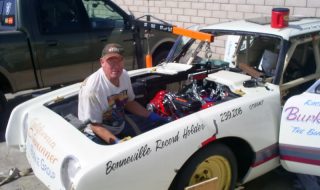
Pro-Touring 66 MustangRace ready 66 Mustang

“I bought a 1966 Mustang Fastback out of a junk yard for $400.  Thought I would challenge myself to build as exotic a g-machine as possible for $5000. ”

It sounds impossible, anti-Pro-Touring even.  MyRideisMe.com asked Ron Schwarz, owner/builder of this Grabber Blue beauty, to share his 5 Tips with our readers.  He tells it like no one else can.  This guy is hilarious!  There are some killer classic quotes here.  Stick to these 5 Tips below and you too can build your own budget dream ride.

1. Choose The Right Car

Your car has to be affordable, but still turn you on. If it doesn’t keep your interest it will be just another project that doesn’t get finished. Choose a car you can get cheap parts for, period.

2. Do your homework

The mods on this Mustang were done with factory (Ford and GM) parts from performance models/sports cars.  The front suspension is all C5 Corvette parts; great handling, big brakes, relatively cheap, and fairly easy to come by.

3. Choose The Right Drivetrain.

Find a drivetrain that meets your horsepower goals and doesn’t need an expensive rebuild or power adders. Instead of the original 4.6L Mustang mill purchased, Ron ended up with an LS1 that had been in a fire for $300.  In fairly stock form the LS1 can easily reach Ron’s goal of 400HP. The purists hate it, but it fit the budget.  Best bang for the buck!

4. Use All The Deal Finding “Tools” Available

The “tools” are Ebay, Craigslist, Racing Junk , trade and barter, your buddies “take-off parts”, etc.  Network with car buddies, see who is upgrading. “Take-offs” can be picked up cheap. The barter system is alive and well.  The tires on Ron’s ‘Stang were traded for a wine cooler.

5. DIY=Do It Yourself!

This is the hardest of the 5, but its also a MUST to meet your budget!  The more you cut, weld, grind and paint the better you get and the more money you save!  Books are good for learning fab’ skills, but we learn more from being around true craftsman.  Don’t be scared to screw up, you can fix it.

Let’s see how Ron used the 5 budget building tips on his own Pro-Touring Mustang Fastback:

“I watch Ebay, Craigslist, and Racingjunk like a hawk. I wouldn’t have been able to do this with out some lucky bidding. What did we do before Ebay?”

We’ll let the Mustang out of the Corral and tell you that Ron didn’t quite make the $5000 budget he set, but who cares!  He did do it for under $9000 though, which is amazing.   Here’s the parts and cost rundown to see how he pulled off the impossible using his Top 5 Budget Tips.

$2750 Car and Rolling Chassis

1966 Mustang Fastback for $400 (floors were non-existent, but I’ve always loved the Fastback), Dana 60 Bread Truck rear with 410’s and powerlock for $75, Housing ends and axles $375, c5 suspension and truck arms Ebay $600, frame $400, wheels 18×12 and 18×10 Ebay $900, traded a wine cooler for some tires (for 335’s, must have been quite a wine cooler.  LOL).
Originally, Ron purchased a Ford 4.6L 2cam and 5 speed with wiring assembly from Racingjunk for $750 but it wasn’t going to meet the goals (hp and budget).  That setup was sold (for a little profit too).  Ron asked the Pro-Touring forum readers “Should I keep it all Ford? Its already got a c5 Corvette suspension in it.  What to do???”
Ford Blue

Ford Blue

Engine/Transmission $500 + trades

Ron has previous experience running LS1’s and had enough computers/wiring laying around to get one running.  “I scored a low-mileage LS1 for $300 (with a couple hundred to replace the pieces that are missing).
“I’m painting the engine Ford blue and remote mounting the coils, maybe the Ford guys won’t notice.  LOL.”
Should cheese off all the die hard Ford guys, maybe I’ll paint the LS1 Ford blue and nobody will know the difference.  I scored a Muncie M21 trans, shifter and bellhousing from my buddy, traded it for an old set of Mustang II spindles and rack I had laying around.  Picked up a set of LS6 heads, cam and intake for a song.  Got an LS1 throttle body off ebay for 95 cents. So here I am, I have a complete chassis,motor,trans,rear,body sitting on a chassis, all accesories and brakes.  I have about $1800.00 left.”

Budget Pro-Touring Mustang Fastback rollerSuspension

Rear springs and weight jacks from race proven parts, the springs were $6.50 ea. and the weight jacks were $18.00, right in my budget, you just can’t beat eBay.  The rear ended up at 63″ face to face, about the same width as a full size pickup rear.  Shocks came off a 2008 Silverado,with 100 miles on it.  I watch eBay, Craigslist, and Racingjunk like a hawk, I wouldn’t have been able to do this with out some lucky bidding.  What did we do before Ebay?

Body

“Most of the rust is gone, but then again, so is most of the car.  Also finally got a serial # and title and some parts off a car that got scrapped.  I built the chassis on the car and the track width is about a foot wider then the Mustang LOL.  I’m making the Mustang fit the track rather than the track fit the Mustang.  The hood is a 2.5″ cowl hood from CJ Mustang parts.  In keeping with the budget its a scratch and dent piece, two of the 4 corners have cracks in them (perfect for this car).
Got a chance to scale my car.  It weighed 2750 pounds with no fuel or driver.  Just under 3100 pounds with me and a full tank of fuel.  The good part was that the car had just about perfect 50/50 weight distribution.”

Budget Pro-Touring Mustang Go-KartRon’s Classic Quotes Continued:

“Besides its the new parts that have been killing me, all the used junk has performed flawlessly(at least so far).  Its alot nicer a car then I originally planned.”
Hoping to squeeze a high 11 sec pass out of the thing, and be a good handling car.  I still would rather have an 11sec. Chevy powered ‘Stang than a 13 sec. Ford powered one.”
“Its coming out just as I pictured it though.  I usually hate when people stray away from the factory look, but I think I like it better then the factory lines.  I should be happy, do to all the tweeking I had to do.  I figure this will be one of those cars people will either really like,or REALLY REALLY hate.Ron”
“This is turning out way nicer a car then I originally planned, and it didn’t cost anything but time.”
“In keeping with the budget theme,I’m shooting it with a Harbor Freight $15 paint gun, yes you heard right $15, was going to break out my good gun that I bought to spray my Camaro, but no it is budget crap to the very end.”
Budget Pro-Touring Mustang GT350 nose
Budget Pro-Touring Mustang rearend
Budget Pro-Touring Mustang cuttin' cones
Budget Pro-Touring Mustang "drifting"
A must-see YouTube video taken by a Pro-Touring forum member at the Peach State Musclecar Challenge!
YouTube Preview Image
See Ron work his magic on his personal website and pro-touring build thread.  Lots more pictures and build details if you want the nitty gritty version!
With the economy doing its downward spiral, building our rides on a budget is as important as it’s always been!  Give us your comments below on what you thought about these 5 Tips and send this story to all your friends so you can start working those trade and barter swaps with your car buddies!
Hechtspeed
Budget Pro-Touring Mustang interiorBudget Pro-Touring Mustang bodyworkBudget Pro-Touring Mustang ready paint prepBudget Pro-Touring Mustang gets paintBudget Pro-Touring Mustang Gets It's Grip OnBudget Pro-Touring Mustang: Wide and Low

What type of grinding disc should I use?

May 26, 2009 by WelderSeries · Leave a Comment 

Sometimes the alternative is way more appealing… for me, grinding welds is about as pleasant as plucking leg hairs one by one, or trying to unfold Saran wrap after it has clung to itself. Grinding is dusty, loud, and unpleasant. I’d much rather spend time learning to weld better so I didn’t have to grind than taking the time grinding. It’s true, a nicely finished mig weld is a thing of beauty, but if you can reduce the amount of time you have to spend finished that weld, you’ll be further ahead.

I’ll list a few of the discs I’ve used in the past, as well as their advantages and disadvantages.


This is a hard disc on steroids. The disc is formed with little mountains all over the surface which prevent it from loading up too quickly. It’s also a bit more aggressive because the mountains are almost like little teeth, cutting into the material. This disc will remove material quickly, but it’s not very good at fine finishing. Around the perimeter, a harder material has been added which is almost like a cutting disc. An advantage is the convex face (it looks kind of like a contact lens…) because it means you can pinpoint the area you want to grind by rolling the disc left to right and forwards to backwards.


Here is a 7″ Scotchbrite type pad. It attaches to a Velcro backing disc. It is not for removing material – it will take off slight imperfections, but where it shines is smoothing transitions and taking out grinding scars. One disadvantage is the load-up time – it can get clogged rather quickly depending on the material you’re using it on. Every garage should have these. They’re available in many many sizes, from little 2″ discs for your angle grinder right up to these 7″ pizzas.


A flat hard disc is probably a common fixture in a lot of garages. Personally, I only use these if they’re sitting nearby and I feel sorry for them. They aren’t for fine sanding… it’s difficult to not leave grinding scars or to grind a flat surface, because the disc itself is flat. One advantage is their load-up rate – usually they will go quite a while without requiring a change due to cloggage.


The sun shines bright on the last disc in the list. These are called “flap discs”, and that’s a pretty accurate description. There are a bunch of sandpaper strips bonded together, overlapping each other. Advantages include, but are not limited to, the ability to fine grind with a 7″ disc (yes, it will!), the ability to hog away material quickly, and the longevity factor. As you grind, the exposed edges of the paper are gradually removed, uncovering more fresh sand paper. A disadvantage could be the price, but for a disc that lasts so long and is so versatile, I think it’s worth it. Kind of like buying a cheap step-drill… it will last for a few holes and then you’ll chuck it. In the garbage I mean… not the drill. Buy a quality step drill and it will be around for a long time.

If you have any comments about grinding or what disc you like, please add it!

For more tech tips, please visit www.welderseries.com.

How-To: Custom Bumper Guards on a 1950 Merc

May 7, 2009 by Hechtspeed · Leave a Comment 

All Ways Hot Rods

Naked '1950 Mercury' bumper without bumper gaurds

Here's a quick "before" snap of the guardless bumper. It looks naked doesn't it! All Ways Hot Rods will fix that.

All Ways Hot Rods, located near downtown Phoenix, was founded in 1999 by the Way brothers Mike and Randy. They help hot rodders build their dream cars. One of those dream cars you may be familiar with is a flawless 1932 3 Window Coupe that won the 2008 Goodguys “America’s Most Beautiful Hot Rod” award.

In this shoebox how-to we’ll take a look at how Gregg Grisham, a long time member of the All Ways team gives the custom touch to a ‘50 Merc’s front and rear bumper by adding ‘51 Merc’ bumper guards. Let’s listen in to the how-to instructions from Gregg: “This method will work for most combinations.

Custom Mercury 1950 compared to 1951 bumper guards

You can see the difference between the bumper profiles in a 1950 guard compared to 1951

Custom bumber how-to showing tig rod to shape and marked

I first used tig rod to copy the profile of the Mercury's bumper, then I decided on a starting point for where to trim the guard. Then I made a pattern of the inner area of the bumper, and after some measuring, traced that onto the guard also. Using a cutoff wheel I trimmed out the guard, and fit it to the bumper.

Custom Mercury bumper gaurd front-test-fit

With an assortment of grinders and sanders I adjusted the fit until I was happy with the depth and angle the guard was sitting at. I then repeated the process for the other side.

I made plates to fit inside the guards, welded them in, and drilled the bumper in a semi flat area.

I made plates to fit inside the guards, welded them in, and drilled the bumper in a semi flat area.

I held the guards in place, and scribed through the hole, onto the plate where I  drilled and tapped the plate allowing one bolt to hold the guard to the bumper.

I held the guards in place, and scribed through the hole, onto the plate where I drilled and tapped the plate allowing one bolt to hold the guard to the bumper.

Now using a pair of rear guards which are slightly different than the fronts, I was able to use the front guards to determine the overall height of the rears.

Now using a pair of rear guards which are slightly different than the fronts, I was able to use the front guards to determine the overall height of the rears.

I sectioned about 3 inches out of the guards and welded them back together.

I sectioned about 3 inches out of the guards and welded them back together.

I then trimmed them out to fit the bumper, mounted them like the fronts, and adjusted the fit to the bumper by building up weld.

I then trimmed them out to fit the bumper, mounted them like the fronts, and adjusted the fit to the bumper by building up weld.

I clamped a large section of copper inside to back up the weld where I had trimmed too much. Then I trimmed the inside of all four guards, and capped the open area at the top.

I clamped a large section of copper inside to back up the weld where I had trimmed too much. Then I trimmed the inside of all four guards, and capped the open area at the top.

I need to mention that it is important to clean off the chrome and copper from where you are welding, and to make the surfaces of your welds as pit free as possible, and a good chrome shop like Kerr West can do wonders to finish off the parts.

Here’s a list of the Chop Shop Tools All Ways Hot Rods used: Rolloc grinder with various pads to clean chrome and grind for fit, 45 degree with cutoff wheel and burrs, as well as a reversable cut off wheel. The hammer and T dolly were used to adjust fit of sections when welding, and to tap out some of the dents in the guards.

All Ways Hot Rods-1950 Merc' Custom bumper guardsHere’s a finished look at the front bumper. “No Way” these bumper guards are NOT originals, you say? Way dude! All Ways Hot Rods that is.

Check the gallery below for more of the finished and in progress photos, along with the tools used.

Go check out the All Ways Hot Rods website for more of their beautiful craftsmanship. Maybe you’ve got a project they can turn into your dream car too!


1964 Morris Minor Custom – UK Style

October 8, 2008 by pikesan · 4 Comments 

Morris Minor Kustom hot rodMinnie the Moocher
1964 Morris Minor 2 door sedan (See the Custom Morris Minor)

Written by: “Tootall” Paul from Cornwall, United Kingdom

‘Minnie’ is my Wife’s ‘64 Morris. She had wanted a kustom for a while and has a particular taste for ‘round’ cars. When one of our clubmates (We are members of UK Kustoms) suggested a Minor we looked harder at them and realized that one would make a great sled. When we were told that if we could find one before the 2002 NASC Nationals then the club would chop it for us, the search was on.

We bought her from a young chap who made us promise that we would look after her. We assured him that we would take great care of her and we have – though maybe not quite in the way he would have expected. We had owned her for 2 weeks before we drove her the 300 miles to the Nationals. She was driven there on Friday, stripped of her glass and interior on Saturday, chopped on Sunday and, with a plastic windscreen installed, driven the 300 miles home again on Monday.

I should mention here that when I say the car was chopped in the showfield, I do literally mean in a field. ‘Chopper’ John and ‘Sawzall’ Phil did the chop in one day, with generator power only. This included welding in the smaller rear window from an earlier split window car and hardtopping the roof.

Morris Minor Kustom hot rod -before chopMorris Minor Kustom hot rod - chop progress

Morris Minor Kustom hot rod - chop back window finishedMorris Minor Kustom hot rod - chop back window

Once home, I taught myself to weld by finishing off some small jobs. The swage around the bottom of the roof needed lengthening to make it look more finished. I also fabricated runners for the rear side glass, which now slides in. While the torch was out, I nosed and decked the car and removed some badges and trim. Now I would hate for you to get the idea that I do all the wrenching and my Wife does all the driving. That’s just not so. While I did the work mentioned above, she did the filler work on the roof and elsewhere and touched in the paint. The whole car is a team effort and has been a learning exercise for us both!

Once the chop was looking finished, it was time to bring Minnie a little closer to the floor. Doing one side each, we lowered the front end by simply turning the torsion bars. Of course I got my side wrong and lowered it too much! It looked great but was un-driveable. The rear end was brought down by fitting some home made lowering blocks to bring the whole thing down by around 4 inches.

The car originally came with a 1098cc 4-cylinder motor. Unfortunately that one didn’t last too long. It blew up on the way back from a show on the South coast, though my Wife still managed to get a speeding ticket even with the blown motor! The old engine was swapped for a 1275cc unit bought cheap from a friend. This one lasted around 250 miles before it too went up in smoke on the way back from a show. We now have another 1275 motor installed. This one was built for us by a Clubmate (good old Chopper John again) so we know it’s gonna last.

We still have a lot of plans for this car: The rear fenders will be extended down and the rear bumper moved down to make her look lower. Fender skirts are in the pipeline too and we want to do something with the front end to disguise the Morris origins. Oh yes and new rear lights too. First of all though is a ‘C’ notch in the rear chassis rails as it sits on the bumpstops and has no suspension apart from the 1 ½ inch thick rubber stops. This makes it a pretty bouncy ride and can be a little uncomfortable on a long run.

All in all we have managed to pretty much achieve what we set out to do. Minnie is well on the way to being a British take on a traditional kustom. She is useable, generally pretty reliable and most importantly with the stupid price of gas in the UK, economical. She has been built on a budget and with an enormous amount of help and encouragement from our clubmates. Most importantly, every time my Wife gets into her, she has a smile on her face. For me, that’s all the encouragement I need.

Thanks Paul!

Please take a look at Paul’s Garage and the Morris Minor in it. He didn’t mention the extensive, (not for the faint of heart) rust repair needed. The car had some issues. But Minnie and Paul got it done to make what I think is a fantastic little custom. Paul’s also got a Falcon Wagon, so he’s definitely all right in my book!

1953 Kustom Kaiser Manhattan- Builder Update

April 23, 2008 by pikesan · 1 Comment 

Somehow, I found another Kustom Kaiser!

When I found Keith’s Kaiser (Click here to see his Garage) I instantly thought, this is one of a kind! Well, it turns out it’s not. Keith and Ron (Click here to see Ron’s Hot Rod’s Garage) have taken different approaches to customizing their Kaisers, but both will be equally cool because of the clean and near-custom finishes on the stock Kaiser.

Ron’s writing a blog for Blogger.com (Click here) that I stumbled on recently. He’s let me run this blog to see what he’s up to for the interior. I’m checking it out just in case I get to work on my Rambler Amercian wagon project again some day! Check it out:
The priming of the miscellaneous parts for the Kaiser went well as the weather was nice and I was able to paint outside. I used PPG self etching epoxy primer DPLF
and prepared the bare metal with “metal Prep” a 50/50 mixture with water then wiped the area down with a 50/50 mixture of PPG Dx330 wax and grease remover and lacquer thinner cleaning a 2′ x2′ area at a time as recommended, so as not to let the metal prep dry. I had 2 quarts of paint that make 1 gal. using the epoxy part 2 additive, and ran out of paint before I could get to the inside of the body, that turned out to be a good thing because I had to complete the center console, weld in studs to fasten the A/C system, electrical panels, emergency brake and hood latch.

The 66 T-Bird console is 9″ too short for the Kaiser interior so an extension piece was hand formed and welded to the back of the console to extend it to the back seat. Filler plates were cut, fit and welded into place in the top front of the console where the T-Bird seat, window, A/C controls & door locks used to be so I would have a clean new surface to mount the new shifter and controls. The bottom front of the console had to be reformed and new pieces welded in to make it wider to fit the transmission tunnel as it was moved forward from stock T-Bird position to fit in under the Kaiser dash. The first attempt to make the riser from the console to the dash failed as I did not like the dash panel that I built to take the place of the radio, but I did like the lower panel with hand formed caps at the bottom where the T-Bird chrome trim pieces ended. So I cut the top panel off and reformed the riser to bolt onto the bottom of the radio cover plate. The lower trim pieces that ran the length of the console where the carpet meets the bottom of the console had to be reformed and made longer to match the new location.
We had originally planned a GPS/CD Player/Am-Fm radio unit to go into the riser panel but after researching the size and cost and giving consideration on how much we would use it we decided to go with a good stereo AM-FM radio system. Custom Auto sound built the radio and a 2 channel front speaker that fits the original Kaiser location and radio cover purchased thru their dealer Soundmove.com (800) 901-0222
The loqwer panel will now have the A/C vent outlets, A/C controls panel, Air Ride Control panel and window switchs in it with the new B & M Hammer shifter going in the flat part of the console.

Vintage Air provided a mockup A/C unit, at $50.00 that is refundable with the purchase of the permanent unit. I tried to fit the GEN II Super under the dash but there is not enough room so we will have to use the mini unit.
Studs were welded to the inside of the firewall for an electric panel mounting plate and new brackets were fabricated and installed for the relocated E-brake handle and hood latch. While I am waiting for the smaller A/C mock up unit and shifter to arriver I will install the new stainless steel brake and fuel plumbing lines on the from that was purchased from Summit Racing.

Please take a look at our sponsor:

Finally Assembled! Pinto baby!

October 29, 2007 by pikesan · 3 Comments 

I’m not sure when I started working on this project, but it was at least 4 years ago. I wanted to build a trick intake setup for my Pinto Powered Roadster called Bonnie. Bonnie’s always turned heads, even parked next to MUCH higher dollar rods. I have to admit that I like that. The intake design is from a tech article I read from the Inglese website. It explains why individual runner intakes and weber carbs are the hot setup.

Now, with the new intake finally on, I’m gonna get more people asking, “What engine is that?”

So here’s where I left off… the last thing to do was weld the flange that would hold the throttle cable:

img_2729.JPGimg_2730.JPG

My Friend Aaron welded everything up for me. It came out nice, then I took it to the sand blast cabinet. After, it looked like cast aluminum, but it weighs less than 3 lbs. These are the before and after blasting shots.

Before blastingAfter blasting

Then finally, here’s what it looks like all mounted up. I can’t wait to spend hours trying to tune this thing!

My Ride is Me!!

before mouting carbsReady to roll!from the side

But, I’m gonna wait to fire it up cause I’m also putting a new header on! This thing is gonna be nasty!

Nasty Header

If you have a build you want to show on the front page, get in touch with us! Pikesan or Napalm. We’d be happy to feature your ride! Get building!


FREE SHIPPING on hundreds of items at NorthernTool.com


Plasma Cutting 101

September 27, 2007 by pikesan · Leave a Comment 

Plasma Cutting: Determining if it’s Right for You and What to Look for in a Machine

Introduction
Do you need a cutting tool for occasional repair and maintenance work? Have you recently embarked on a new project that requires higher cutting volumes? Or, are you looking for a new alternative to your current mechanical saw? All of these scenarios provide great reasons to investigate plasma cutting. With the cost of machines on the decline, smaller-sized, portable machines flooding the market and technology offering increased benefits and easier usage — it may be time to take a serious look at plasma for your cutting applications. The benefits of plasma cutting include ease of use, higher quality cuts and faster travel speeds.

What is Plasma Cutting Technology?
In simplest terms, plasma cutting is a process that uses a high velocity jet of ionized gas that is delivered from a constricting orifice. The high velocity ionized gas, that is, the plasma, conducts electricity from the torch of the plasma cutter to the work piece. The plasma heats the workpiece, melting the material. The high velocity stream of ionized gas mechanically blows the molten metal away, severing the material.

How Does Plasma Cutting Compare to Oxyfuel cutting?
Plasma cutting can be performed on any type of conductive metal – mild steel, aluminum and stainless are some examples. With mild steel, operators will experience faster, thicker cuts than with alloys.

Oxyfuel cuts by burning, or oxidizing, the metal it is severing. It is therefore limited to steel and other ferrous metals which support the oxidizing process. Metals like aluminum and stainless steel form an oxide that inhibits further oxidization, making conventional oxyfuel cutting impossible. Plasma cutting, however, does not rely on oxidation to work, and thus it can cut aluminum, stainless and any other conductive material.

While different gasses can be used for plasma cutting, most people today use compressed air for the plasma gas. In most shops, compressed air is readily available, and thus plasma does not require fuel gas and compressed oxygen for operation.

Plasma cutting is typically easier for the novice to master, and on thinner materials, plasma cutting is much faster than oxyfuel cutting. However, for heavy sections of steel (1 inch and greater), oxyfuel is still preferred since oxyfuel is typically faster and, for heavier plate applications, very high capacity power supplies are required for plasma cutting applications.

What Can I Use a Plasma Cutter for?
Plasma cutting is ideal for cutting steel, and non-ferrous material less than 1 inch thick. Oxyfuel cutting requires that the operator carefully control the cutting speed so as to maintain the oxidizing process. Plasma is more forgiving in this regard. Plasma cutting really shines in some niche applications, such as cutting expanded metal, something that is nearly impossible with oxyfuel. And, compared to mechanical mean of cutting, plasma cutting is typically much faster, and can easily make non-linear cuts.

What are the limitations to Plasma Cutting? Where is Oxyfuel preferred?
The plasma cutting machines are typically more expensive than oxyacetylene, and also, oxyacetylene does not require access to electrical power or compressed air which may make it a more convenient method for some users. Oxyfuel can cut thicker sections (>1 inch) of steel more quickly than plasma.

What to Look for When Purchasing a Plasma Cutting Machine
Once you have determined plasma cutting is the right process for you, look at the following factors when making a buying decision.

1. Determine The Thickness of the Metal that You will Most Frequently Cut
One of the first factors you need to determine is the thickness of metal most frequently cut. Most plasma cutting power sources are rated on their cutting ability and amperage. Therefore, if you most often cut ¼” thick material, you should consider a lower amperage plasma cutter. If you most frequently cut metal that is ½” in thickness look for a higher amperage machine. Even though a smaller machine may be able to cut through a given thickness of metal, it may not produce a quality cut. Instead, you may get a sever cut which barely makes it through the plate and leaves behind dross or slag. Every unit has an optimal range of thickness — make sure it matches up with what you need. In general, a ¼” machine has approximately 25 amps of output, a 1/2” machine has a 50-60 amp output while a ¾” – 1″ machine has 80 amps output.

2. Select Your Optimal Cutting Speed
Do you perform most of your cutting in a production environment or in an atmosphere where cutting speed isn’t as critical? When buying a plasma cutter, the manufacturer should provide cutting speeds for all thickness of metal measured in IPM (inches per minute). If the metal you cut most frequently is ¼”, a machine that offers higher amperages will be able to cut through the metal much faster than one rated at a lower amperage, although both will do the job. For production cutting, a good rule of thumb is to choose a machine, which can handle approximately twice your normal cutting thickness. For example, to perform long, fast, quality production cuts on ¼” steel, choose a 1/2” class (60 amp) machine.

If you are performing long, time-consuming cuts or are cutting in an automated set-up, be sure to check into the machine’s duty cycle. Duty cycle is simply the time you can continuously cut before the machine or torch will overheat and require cooling. Duty cycle is rated as a percentage of a ten-minute period. For example, a 60 percent duty cycle at 50 amps means you can cut with 50 amps output power continuously for six minutes out of a 10-minute period. The higher the duty cycle, the longer you can cut without taking a break.

3. Can the Machine Offer an Alternative to High Frequency Starting?
Most plasma cutters have a pilot arc that utilizes high frequency to conduct electricity through the air. However, high frequency can interfere with computers or office equipment that may be in use in the area. Thus, starting methods that eliminate the potential problems associated with high frequency starting circuits may be advantageous.

The lift arc method features a DC+ nozzle with a DC- electrode inside. Initially, the nozzle and the electrode physically touch. When the trigger is pulled, current flows between the electrode and the nozzle. Next, the electrode pulls away from the nozzle and a pilot arc is established. The transfer from pilot to cutting arc occurs when the pilot arc is brought close to the work piece. This transfer is caused by the electric potential from nozzle to work.

Lincoln Electric’s Pro-Cut® line offers patented Dual Winding Technology with separate windings for the pilot and cutting arc. With Dual Windings, the pilot arc is optimized during current transfer for a fast, positive transfer without the use of a resistor. Dual Windings work by creating the electric potential for a transfer – they create a voltage difference to snap the arc to the work piece. Because Lincoln has eliminated the large resistor usually found in plasma cutting machines, it can offer units that are smaller in size with increased portability.

4. Compare Consumable Cost Versus Consumable Life
Plasma cutting torches have a variety of wear items that require replacement, commonly called consumables. Look for a manufacturer that offers a machine with the fewest number of consumable parts. A smaller number of consumables mean less to replace and more cost savings. For example, Lincoln Electric’s Pro-Cut line has only three front-end parts in the torch and only two of those are consumables: the electrode and the nozzle. Lincoln also offers tool-less changeovers when replacing these consumables.

Look in the manufacturer’s specifications for how long a consumable will last – but be sure when comparing one machine against another that you are comparing the same data. Some manufacturers will rate consumables by number of cuts, while others will use the number of starts as the measurement standard.

5. Test the Machine and Examine Cut Quality
Make test cuts on a number of machines, traveling at the same rate of speed on the same thickness of material to see which machine offers the best quality. As you compare cuts, examine the plate for dross on the bottom side and see if the kerf (the gap left by cut) angle is perpendicular or angular.

Look for a plasma cutter that offers a tight, focused arc. Lincoln Electric offers its Pro-Cut line with VORTECH™ Technology consumables which are specially designed to concentrate the plasma swirl, offering a tighter arc and concentrating more cutting power on the work piece.

Another test to perform is to lift the plasma torch up from the plate while cutting. See how far you can move the torch away from the work piece and still maintain an arc. A longer arc means more volts and the ability to cut through thicker plate.

6. Pilot to Cut and Cut to Pilot Transfers
The transfer from pilot arc to cutting arc occurs when the pilot arc is brought close to the work piece. A voltage potential from nozzle to work is mechanism for this transfer. Traditionally, a large resistor in the pilot arc current path created this voltage potential. This voltage potential directly affects the height at which the arc can transfer. After the pilot arc transfers to work a switch (relay or transistor) is used to open the current path.

Look for a machine that provides a quick, positive transfer from pilot to cutting at a large transfer height. These machines will be more forgiving to the operator and will better support gouging. A good way to test transfer characteristics is by cutting expanded metal or gratings. In these instances, the machine will be required to quickly transfer from pilot to cut and back to pilot very quickly. To get around this, they may recommend you cut expanded metal using only the pilot current.

Lincoln’s Pro-Cut products excel at this process because they employ Dual Winding Technology™. This technology utilizes two separate power systems (windings): one tailored for pilot arcs, the other for cutting. This patented configuration creates the nozzle to work voltage potential without a large resistor. Additionally, the control system can rapidly select which winding is required for the task. The result is instantaneous positive transfers from up to ¼” away from the work. At the end of the cut, the control system maintains the arc by instantly retracting back into a pilot arc.

*Pro-Cut 55 and 80 only.

7. Check the Machine’s Working Visibility
As you are working on an application, you want to be able to see what you are cutting, especially when tracing a pattern. Visibility is facilitated by the geometry of the torch – a smaller, less bulky torch will enable you to better see where you are cutting, as will an extended nozzle.

8. Look for the Portability Factor
Many consumers use their plasma cutter for a variety of cutting applications and need to move the machine around a plant, job site or even from site to site. Having a lightweight, portable unit and a means of transportation for that unit – such as a valet style undercarriage or shoulder strap – make all the difference. Additionally, if floor space in a work area is limited, having a machine with a small footprint is valuable.

Also, you want a machine that offers storage for the work cable, torch and consumables. Built-in storage drastically improves portability since these items will not drag on the ground or get lost during machine transport.

9. Determine the Ruggedness of the Machine
For today’s hard job site environments, look for a machine that offers durability and has protected controls. For example, fittings and torch connections that are protected will wear better than those that aren’t. Some machines offer a protective cage around the air filter and other integral parts of the machine. These filters are an important feature since they ensure oil is removed from the compressed air. Oil can cause arcing and reducing cutting performance. Protection of these filters is important as they ensure oil and water, which reduces cutting performance, is removed from the compressed air.

10. Find Out if the Machine is Easy to Operate and Feels Comfortable
Look for a plasma cutter that has a big, easy-to-read control panel that is user-friendly. Such a panel allows someone who does not normally use a plasma cutter to be able to pick it up and use it. In addition, a machine with procedural information clearly printed on the unit will help with set-up and troubleshooting.

How does the torch feel in your hand? You want something that has good ergonomics and feels comfortable.

11. Look for Safety Features
Look for a machine that offers a true Nozzle-in-Place safety sensor. With such a feature, the plasma cutter will not start an arc unless the nozzle is in place. Some safety systems can be fooled into thinking the nozzle is in place (i.e. shield cup sensing), even when it is not. If the output is turned on, the operator will be exposed to 300 VDC, a very unsafe condition. This cannot happen with the Lincoln Nozzle-in-Place safety sensor.

Look for a machine that provides a pre-flow sequence. This feature provides an advanced warning to the use before the arc initiates. In addition, look for a machine which provides a three-second pre-flow safety which gives users advanced warning to make sure all body parts are clear of the nozzle before the arc initiates.

How Can I Make the Most of This Cutting Tool?
After you have selected the plasma cutting machine that is right for you, here are some tricks-of-the-trade that will help beginners make the best possible cut.

1. Set-Up Procedures
Before you start, check for the following items:

  • A clean compressed air supply, without water or oil. Consumables that wear quickly, or black burn marks on the plate, may indicate that the air is contaminated

  • Correct air pressure – this can be checked by looking at the gauges on the unit

  • A nozzle and electrode are correctly in place

  • A good connection of the work lead to a clean portion of the work

2. Safety Gear
Some basic safety practices should be observed. You should read your instruction manual thoroughly to understand the machine. Wear long sleeves and gloves while cutting since molten metal is generated during the cutting process. Eye protection such as dark goggles or a welding shield is required to protect your eyes from the cutting arc. Typically a darkness shade of #7 to #9 is acceptable. Finally, follow all safety tips and guidelines that are detailed in your instruction manual.

3. Piercing the Work
Many inexperienced users try to pierce the metal by coming straight down, perpendicular (90 degrees) to the work. This results in molten metal being blown back into the torch. A better method is to approach the metal at an angle (60 degrees from horizontal, 30 degrees from vertical) and then rotate the torch to the vertical position. This way, the molten metal is blown away from the torch.

4. Don’t Touch the Nozzle to the Work Piece
Do not touch the nozzle to the work when using current levels of 45 amps or more. Doing so will drastically reduce the nozzle life as the cutting will double arc through the nozzle. Double arcing can also occur if the torch is guided by dragging it against a metal template. The result is the same as dragging the nozzle on the work — prematurely worn nozzles.

5. Beginners Should Use a Drag Cup to Facilitate the Cut
Many systems offer an insulated drag cup, which snaps over the nozzle. This allows the torch to rest on the work piece and dragged along to facilitate a consistent cut.

6. Travel at the Right Speed
When moving at the right cutting speed, the molten metal spray will blow out the bottom of the plate at a 15 to 20 degree angle. If you are moving too slowly, you will create slow speed dross, which is an accumulation of molten metal on the bottom edge of the cut. When moving too fast, high-speed dross on the top surface is created since you are not allowing time for the arc to completely go through the metal. Traveling too fast or too slow will create a low-quality cut. Typically, low speed dross can be distinguished from high-speed dross by ease of removal. For example, low speed dross can be removed by hand whereas high-speed dross typically requires grinding.

7. Set the Current to Maximum As You Begin
When setting the current, put it on the maximum output of the machine, then turn it down as needed. More power is usually better, except when doing precision cutting or when you need to keep a small kerf.

8. Minimize Pilot Arc Time
Because of the wear it creates on the consumables, try to minimize the amount of time spent in pilot arc mode. To do this, position the plasma torch by the edge of the work before starting the arc so you can get right to cutting.

9. Maintain A Constant Work Distance
Optimally, you should maintain a 3/16″ to 1/8″ distance from the nozzle to the work. Moving the torch in an up and down fashion will only hinder your efforts.

10. Travel in the Direction that will Give You the Best Finished Work
If you are making a circular cut and plan to keep the round piece as your finished work, move in a clockwise direction. If you plan to keep the piece from which the circle was cut, move in a counterclockwise direction.

As you push the torch away from you, the better cut will appear on the metal that is on the right hand side, since it will tend to have a better, squarer edge.

11. End with a Push Angle on Thick Material
One trick to use on thicker material is to rotate the torch slightly, increasing the torch orientation to a push, rather than drag angle as you cut through the last section of material. This increase in the push angle at the finish will cut through the bottom first and get rid of the bottom corner that is usually left at the end of thick plate. Never finish a cut by using the torch to hammer away the last corner of the work.

After finding the right machine for your application and learning some of the tricks of the trade, you should be ready to cut. Remember that plasma cutting offers a number of benefits and should provide you with faster, higher quality cuts.

For more information, visit Lincoln Electric

How To Weld Aluminum with a Compact MIG Welder

September 23, 2007 by pikesan · 2 Comments 

How To Successfully Weld Aluminum with a Compact MIG Welder from Lincoln Electric

By Jim Harris®, Product Manager, The Lincoln Electric Company and
Frank Armao, Group Leader, Non Ferrous Applications, The Lincoln Electric Company

When it comes to welding aluminum items around the home or garage, there are a few misconceptions we hope to clear up: 1) That you need to invest in a $4,000 welding machine and be highly skilled to have success; 2) With no practice you can make excellent welds the first time the wire feed welder is taken out of the box; and 3) You need an expensive spool gun suited for aluminum.

The truth is that with practice, the right equipment and proper set-up, a compact MIG welder will be able to tackle occasional aluminum welding jobs. Using your MIG welder, you will be able to work on a variety of items around your home and yard, such as grills, railings, backyard furniture, boat docks and even decorative elements. Compact MIG welders, such as the SP, Weld-Pak or Pro models from Lincoln Electric, are available at distributors and retail outlets.

A Word About Aluminum

Even home welding enthusiasts who have experience welding steel may find a switch to aluminum challenging. Here’s why: Because of the softness of aluminum wire, it is more difficult to feed. In addition, wire diameters and machine settings normally used for steel may not be appropriate for aluminum. In order to be successful, ask yourself these questions:

What Machine Do I Need?

The first decision is what type of machine is right for the job. Keep in mind that a 115 volt wire feeder welder can handle jobs that range from 22 to 12 gauge and with moderate preheating, you can probably weld as thick as 1/8″. Be aware that preheating should be limited to 250 degrees F maximum.

Another option is a 230 volt machine which can weld from 22 gauge all the way to 3/16″. Proper preheat can take the range to 1/4″. If you will need to weld a broader range of aluminum thicknesses, consider investing in the 230v machine.

Remember, if you plan on doing regular aluminum fabrication, you will need a heavy duty machine. The 115 volt and 230 volt compact MIG welder models are acceptable for occasional aluminum jobs, but not recommended for heavy duty aluminum use. For daily production welding on heavier aluminum, consider a welder that has greater than 200 amps output.

After you have chosen your input voltage, another common question you will be asked when selecting a welder is whether you want a continuous or tapped voltage control model.

A continuous voltage control model lets you set an infinite range of voltage within the rating of the machine, allowing more adjustability, fine tuning and precise control. This permits you to more easily adapt the voltage to your application and particular skill level.

If you’re on a budget, opt for the tapped control unit. This machine has a rotary switch with four or five fixed voltage choices. It will not give you the control of a continuous model, but it can be slightly easier to get up to speed with and costs less to purchase and will be adequate for most applications.

What Type of Welds Can be Made?

For these types of machines, it is best to make welds in the horizontal and flat positions. In general, fillet welds in lap joints are made more easily than groove welds in butt joints. Fillet welds in tee joints are preferred over corner joints. Keep in mind that home welding by an amateur is not recommended for critical welds where failure could result in serious injury.

What Type of Shielding Gas is Required?

MIG welding aluminum is different than welding steel when it comes to shielding gas requirements. For aluminum, 100 percent argon is the gas of choice, whereas steel welding calls for a mixed gas or 100 percent CO2 gas. The good news is that no special equipment is needed – your existing regulators (with the exception of CO2 regulators) and gas hoses can be used for both pure blends and mixed gases.

What Polarity Setting is Needed?

All MIG welding, including on aluminum materials, requires electrode positive polarity, while flux-cored processes typically use electrode negative. If you are switching your wire feed welder between processes, make sure to switch your polarity. This is a common mistake that many beginning welders make.

What Aluminum Wire Electrode Alloy Type Should I Buy?

You will not obtain good results attempting to weld on aluminum with a steel wire electrode.

Instead, our recommendation is that compact MIG welders should be limited to .035″ diameter 4043 aluminum alloy filler metal. A 5356 aluminum alloy electrode may commonly be recommended by retailers and distributors, since it is a stiffer wire and can be easier to feed. However, with these types of wire feed welders, there is often not enough amperage to achieve a good weld with 5356. Even though 4043 is a softer wire, following the proper steps outlined below will ensure good feedability.

Do not use other diameter wires. Specifically, you should avoid 0.030″ wire (it is difficult to feed) and 3/64″ wire (these compact machines do not typically produce enough current to reliably melt this diameter of wire).

How Do I Set-Up My Machine to Weld Aluminum?

Now that you know the type of machine you want and its capabilities/limitations, it is important to know how best to set it up. Follow these tips:

Purchase an Aluminum Feeding Kit

Attention to feeding issues is much more critical when it comes to aluminum welding. It is highly recommended that you purchase an aluminum feeding kit, which includes the following items:

  • Non-metallic liner – designed to minimize the amount of friction on the wire
  • U-shaped drive rolls – to avoid crushing or deforming the soft aluminum wire. These drive rolls do not shave the wire like V-groove drive rolls. Using V-groove drive rolls, the resulting wire shavings can clog the liner and lead to feeding problems.
  • Inlet and outlet guides – designed specifically to avoid wire shaving.
  • Contact tips – as compared to those used for the same diameter of steel wire electrode, contact tips for aluminum have larger diameter holes, since as aluminum heats up, it expands more than steel. Therefore, contact tips for aluminum applications are sized small enough to maintain good electrical contact, but large enough to allow for expansion.

Load Wire Into the Machine

There is a trick to properly loading aluminum wire into a wire feed welder. While the same technique should be used with steel wire electrodes, it is especially important with aluminum wire loading, to avoid feeding problems during welding.

With one hand, hold the wire spool securely so it doesn’t unravel. Once you remove the cellophane wrapping, hold the loose end of the wire with the other hand – don’t let go until you lock the wire into the drive roll.

Inexperienced operators commonly let go of the loose end and the spool starts to unravel. If this happens, it cannot be wound back up and still perform properly – you will have to purchase another spool.

Set the Wire Brake Tension

The idea is to have just enough tension to keep the wire from unraveling, but not too much tension so that it causes a drag on the wire. To do this, set the wire spool brake tension for a minimum setting. Then, load the spool on and feed it through the drive rolls. With everything stopped, if the spool keeps turning by itself, there is not enough brake tension. Be careful though, since too much brake tension can put excessive force on the wire.

And, operators shouldn’t be surprised at the end of the spool if they cannot feed the last few turns; usually the wire is too stiff to come off easily.

Set the Drive Roll Tension

This step is probably the most important in the whole set-up process. The experts from Lincoln recommend holding the nozzle about 1″ away from an electrically insulated surface at a slight angle. Then, set the drive roll tension close to minimum. Pull the trigger and watch the behavior – as the wire touches the insulated surface, the drive rolls should slip. Tighten down from that point until the wire stops slipping. Again, a word of caution, as wire that is set too tight will tend to ‘birdnest’. This means the wire stops at the gun but the drive rolls are still turning. The result is wire feeds out of the drive rolls and birdnests, or backs up and tangles, anywhere along the drive path – at the guide tubes, in the gun liner, etc.

Remember, as you set the drive roll tension in the manner described above, that when the gun trigger is pressed, the wire is electrically hot, so always wear a quality pair of welding gloves.

Ensure Good Electrical Connections

The work clamp should be securely attached to the welding piece in an area free from paint and contaminants. To clean the piece, use a degreasing solvent to remove any oil and grease. Be sure that the surface is dry before you weld. Also, do not weld with flammable material nearby, such as a container of solvent or paint. As a second step, use a clean, stainless steel wire brush to remove all oxides from the surface of the aluminum.

Position Is Important

As you are welding, keep the gun cable as straight as possible to minimize feeding restrictions on the soft aluminum wire. A bend in the gun cable can make the wire kink and feed poorly.

Practice, Practice, Practice!

There is no substitute for practice. Just as a high-quality musical instrument won’t make you a good player without practice, a welding operator needs to hone his or her skills as well. Before too long, you and your welder will be making beautiful music (or at least welds) together!
Visit LINCOLN ELECTRIC for more!